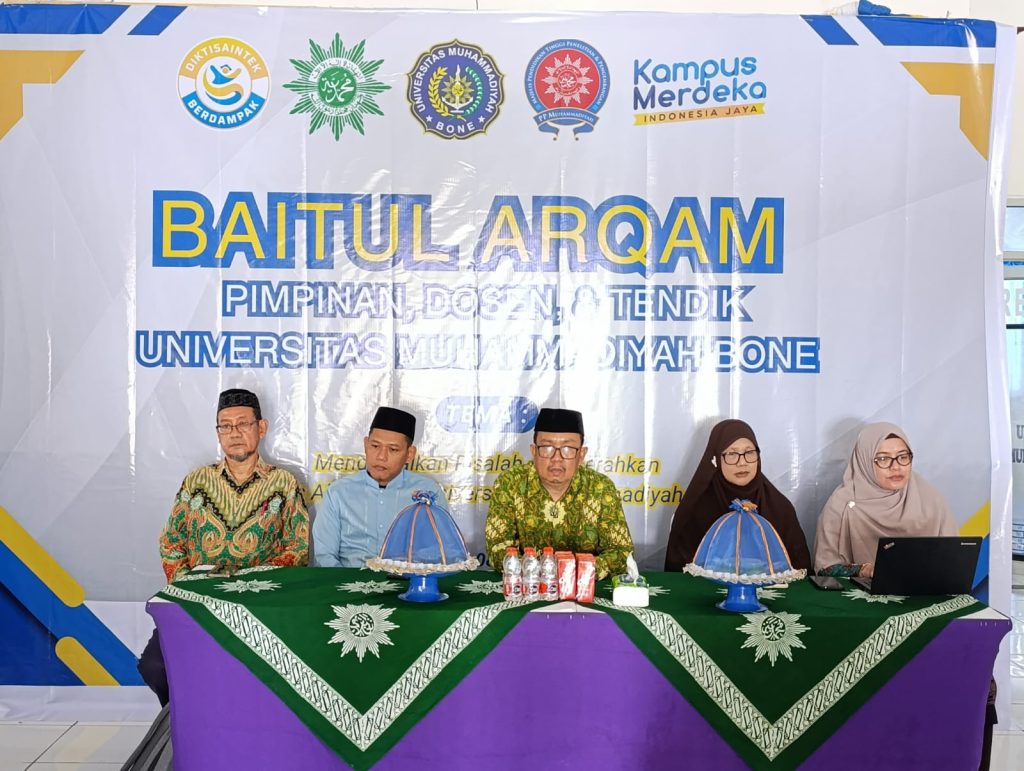
Bone, August 2, 2025 — Muhammadiyah University of Bone held a Baitul Arqam program for its leadership, lecturers, and educational staff (tendik) as part of an effort to strengthen Muhammadiyah ideology and internalize the values of Al-Islam and Muhammadiyah. The event took place over two days, from August 2 to 3, 2025, at the Muhammadiyah University of Bone campus.
The event was officially opened by the Rector of UNIM Bone, Dr. H. Muhammad Jafar, S.Pd., M.Pd. In his opening remarks, he emphasized the importance of Baitul Arqam as a means to reinforce the identity of the Muhammadiyah academic community.
“Baitul Arqam is not just a routine activity; it is a strategic momentum to strengthen our ideological commitment in fulfilling our mandates as educators and servants within the Muhammadiyah institution,” he stated.
During the program, participants received materials regarding Muhammadiyah ideology, the Manhaj Tarjih (legal methodology), leadership from an Islamic perspective, and the Islamic work ethos. The speakers included representatives from the Muhammadiyah Regional Leadership (PWM) of South Sulawesi, the Cadre Education Council (MPK) of PWM South Sulawesi, and the leadership of Muhammadiyah University of Bone.
The Chairperson of the Organizing Committee, Tansini, S.Pd., M.M., revealed that the event was attended by over 81 participants, consisting of faculty leaders, heads of study programs, as well as lecturers and staff from various units within UNIM Bone.
“We hope that through this activity, the values of Islam and Muhammadiyah will become more deeply rooted in the execution of the duties and responsibilities of the entire academic community,” she remarked.
The Baitul Arqam sessions were conducted in a solemn yet warm and interactive atmosphere. Participants showed great enthusiasm in following every session, including the discussions and worship practices that form an essential part of the program.
This Baitul Arqam activity is a concrete step by Muhammadiyah University of Bone in realizing human resources that are superior, high-integrity, and uphold Islamic values in their roles as educators and community servants.